Designing dyes without PCA: a more robust approach for the textile industry
As the textile industry continues to evolve, so too does the way it approaches chemical safety. Increasingly, the conversation is moving beyond compliance at the finished garment stage toward a more fundamental question: how can risk be reduced at the source?
This shift is particularly relevant when it comes to substances like para-chloroaniline (PCA).
In earlier articles, we explored why PCA is attracting growing attention and how it can appear as a residual substance in certain dye manufacturing processes. Traditionally, managing such substances has often relied on downstream controls — including washing and rinsing steps during textile processing.
While these approaches can be effective, they also introduce complexity.
When compliance depends on additional processing steps, outcomes can vary depending on factors such as mill conditions, water quality and process control. At the same time, increased washing requirements contribute to higher water consumption, greater energy use and additional wastewater treatment — all of which are under increasing scrutiny from both regulators and brands.
As a result, the industry is increasingly looking toward a different model: hazard avoidance by design.
Moving upstream: eliminating PCA at the source
Rather than managing residual substances after the fact, a growing number of dye manufacturers are focusing on how dyes are designed and produced in the first place.
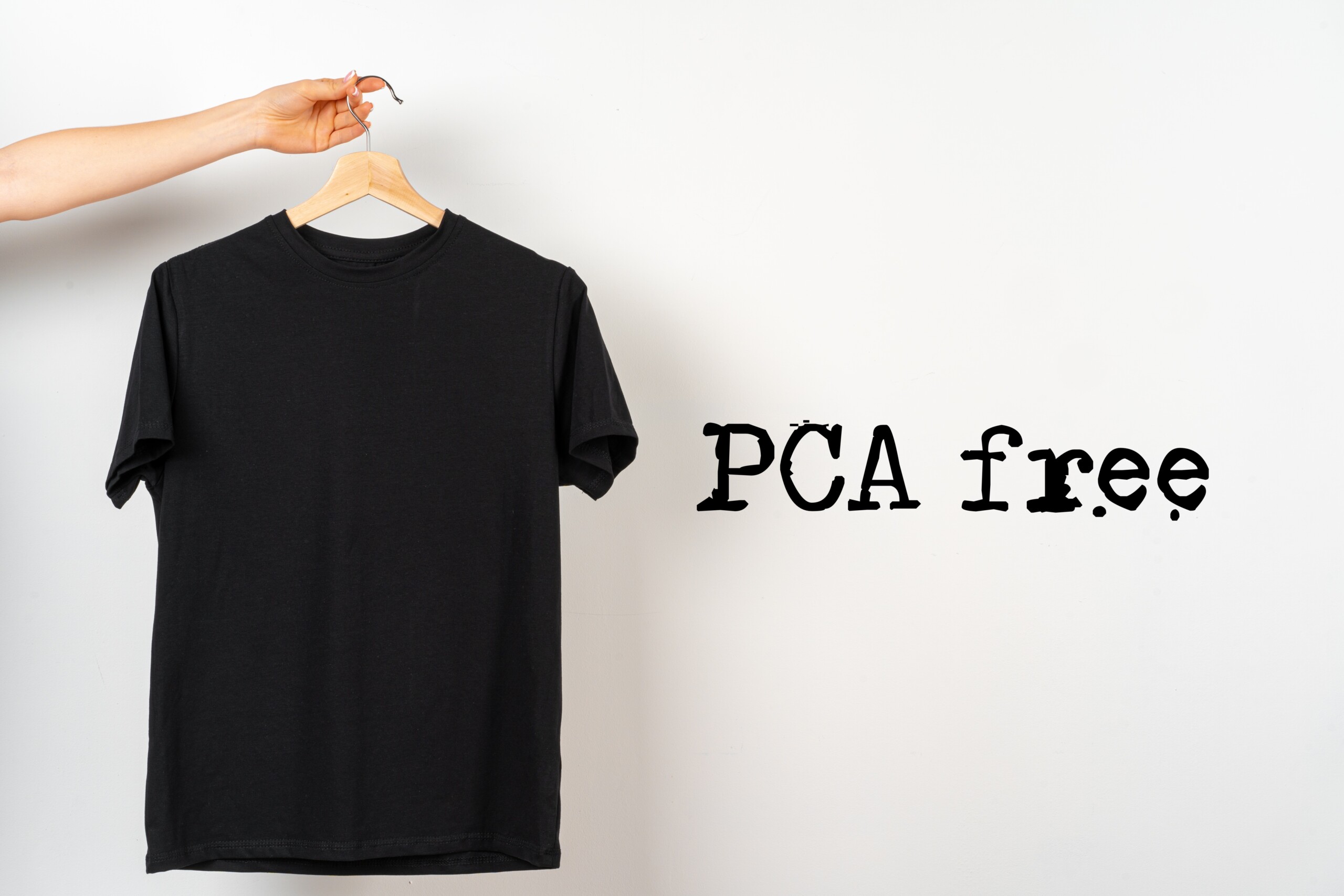
In the case of PCA, this means developing synthesis routes that eliminate PCA altogether. By doing so, the risk of residual PCA in the finished dye is effectively removed, rather than controlled later in the process.
This upstream approach offers several advantages.
First, it simplifies compliance. If PCA is not present in the dye from the outset, there is less reliance on downstream processing to meet regulatory thresholds or brand requirements.
Second, it improves consistency. Removing variability associated with washing and rinsing processes helps ensure more predictable outcomes across different production environments.
Third, it supports broader sustainability goals. Reducing the need for additional washing steps can lower water consumption, energy use and wastewater load, aligning with industry initiatives focused on resource efficiency and environmental impact.
From concept to application: PCA-free dye chemistry
At KISCO, this approach has guided the development of our Nature and NaturePlus dye ranges.
The Nature range was developed specifically to address concerns around PCA. By redesigning the synthesis process, these dyes are manufactured to ensure that PCA is not present as a residual substance in the final product. This eliminates the need for additional washing steps aimed at removing PCA during textile processing.
Building on this foundation, the NaturePlus range extends the concept further. In addition to being PCA-free, these dyes are designed to deliver operational benefits, including reduced processing time, lower water usage and decreased energy consumption during dyeing.
This reflects a broader shift in the industry: moving from compliance-driven chemistry to performance-driven sustainability, where safer chemistry and process efficiency go hand in hand.
A changing expectation in textile chemistry
As brands continue to strengthen their chemical management frameworks and demand greater transparency, expectations are changing.
It is no longer enough for a textile to meet regulatory limits at the final stage. Increasingly, stakeholders are asking how those results are achieved — and whether the underlying chemistry aligns with long-term sustainability goals.
In this context, approaches that eliminate hazardous substances at the source are likely to play an increasingly important role.
Designing dyes without PCA is one example of how the industry can respond to these expectations — not by adding more controls at the end of the process, but by rethinking the chemistry from the beginning.